
Blog

Debunking The Costs of Energy Code Compliance in Massachusetts: Construction and Delivery (Part 2)

When projects move from design into construction, the cost conversation doesn’t get simpler—it gets less precise. Construction-phase cost pressure is rarely caused by a single requirement. It emerges from how design decisions, procurement timing, trade coordination, and field execution interact under real project conditions. This second post in our series looks at the construction and delivery phase, where cost risk becomes real.

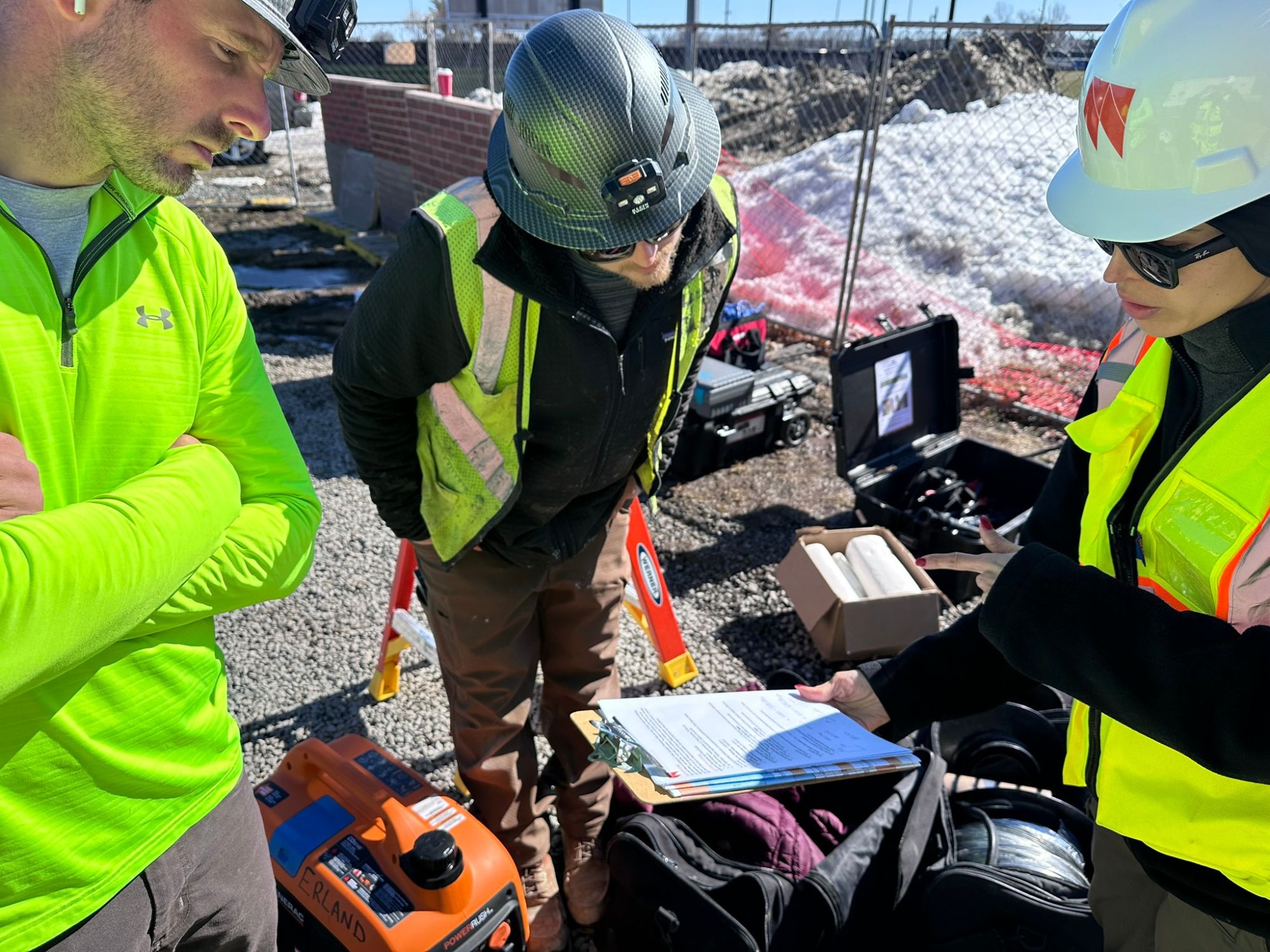
Construction workers wearing safety helmets and high-visibility vests review equipment and materials on an active job site next to a partially built structure

Massachusetts energy codes do not directly drive most construction-phase cost increases. Instead, costs during construction are typically driven by coordination gaps, procurement timing, verification failures, and schedule delays—not the code requirements themselves. Projects that align design intent, documentation, and field execution early are far more likely to control cost escalation.

The first post in this series focused on design-phase cost attribution: how to separate actual code deltas from baseline code compliance, entitlement pacing, inclusionary zoning, land carry, incentives, financing, and late design coordination. This second post shifts to construction and delivery.

By the time a project reaches construction, the question should not be whether high performance is possible. The question should be whether the team has converted design intent into a clear implementation strategy.

If the answer is no, the hidden costs are not only material premiums. They are RFIs, conservative pricing, missed inspections, rework, failed tests, unclear documentation, field sequencing conflicts, and avoidable scheduledelays.

That is where code literacy, third-party review, certification pathways, and construction-phase discipline matter most.

This is a stage, it becomes even easier to attribute cost impacts to “the code,” even when the underlying drivers are timing, sequencing, or execution.

The goal is the same as Part 1: not to dismiss cost pressure, but to separate actual code-driven impacts from the broader set of factors that shape cost as a project is built.

If Part 1 focused on separating cost drivers during design, Part 2 shows how those same categories appear (often less clearly) during construction.

How We Got Here: Not Overnight, But Still Fast for the Field

At a recent CSI Boston discussion, one attendee raised a concern that some building inspectors feel the energy code has come too far, too fast. That concern deserves consideration, especially because inspectors, contractors, designers, owners, and consultants are all trying to implement requirements in real projects with real budgets and schedules.

Here are two responses: first, Massachusetts’ current framework did not appear overnight. The Commonwealth’s current energy-code landscape is rooted in the 2021 IECC and a long-running Stretch Code process, with SWA’s Massachusetts Stretch and Specialized Code quick guide noting the multi-pathway structure now facing project teams. The State’s Building Energy Code resources provide the official context for Base, Stretch, and Specialized Code requirements.

Second, the fact that the code is complex is exactly why clearer pathways matter. If the market is still building shared literacy, then the answer is not less rigor by default. It is better process: earlier pathway selection, better plan documentation, clearer responsibility matrices, more consistent field verification, and stronger handoffs between design, construction, commissioning, and code review.

Even when code requirements evolve, cost risk during construction is driven by how clearly those requirements are translated into drawings, responsibilities, and verification—not how quickly they were adopted.

Certification Pathways Can Reduce Ambiguity

This is where Passive House and HERS-based pathways can be especially useful.

Certification pathways do not remove the authority of the building official. They do, however, bring a more structured compliance process to the table: defined modeling, prerequisite measures, third-party verification, documentation, and closeout packages.

SWA’s quick guide notes that third-party oversight and/or verification is required across Stretch and Specialized Code projects, with roles that may include commissioning agents, Passive House consultants and verifiers, or HERS Raters, depending on the code path. That matters because the inspector should not have to determine the  compliance logic after the fact from scattered submittals, field conditions, and incomplete documentation.

Done well, certification pathways help clarify what performance target the project is using, what documentation should be available, what field testing is required, who is responsible for verification, and where the code official should focus review attention.

In that sense, inspectors can be some of the strongest flag wavers for certification pathways. Not because certification is an end-run around enforcement, but because it makes enforcement more legible.

Certification pathways reduce cost risk by defining expectations early—what will be built, how it will be verified, and who is responsible—before issues surface in the field.

The Construction-Phase Risks Are Specific

Once construction starts, the cost risks become much more concrete.

Air-barrier continuity has to survive real sequencing. Thermal-bridge mitigation has to be coordinated with cladding attachments, shelf angles, slabs, balconies, parapets, windows, and roof transitions. Ventilation systems have to fit, be accessible, be balanced, and perform as modeled. ERVs and HRVs have to be selected, installed, commissioned, and maintained in a way that matches the compliance assumptions.

This is also where baseline code practice and high-performance practice overlap.

As more jurisdictions adopt the 2021 IECC, project teams are facing more explicit air-barrier verification, blower-door testing, and enclosure commissioning expectations. SWA’s 2021 IECC air-barrier verification post explains that teams should not wait for permit reviewers to flag air-barrier compliance in the plans; the details and verification strategy need to be built in before expensive, construction-phase corrections.

The practical lesson is that construction-phase verification is not a paper exercise;  it’s a risk management tool.

Mid-construction inspections, enclosure mockups, pre-cover reviews, blower-door planning, ventilation balancing, commissioning, and issue tracking all reduce the risk that compliance becomes a late-stage scramble.

Construction-phase cost risk is primarily driven by coordination, sequencing, and verification—not by the presence of energy code requirements themselves.

Passive House Costs Reflect Delivery Strategy, And Not Necessarily A Premium

The debate over a “green premium” isn’t new. Passive House just happens to be the current “green program” at the center of cost escalation claims. But project data shows that cost outcomes are closely tied to how the project is delivered.

The Massachusetts Clean Energy Center’s Passive House Design Challenge was created in part to measure initial cost over lifetime return on investment (ROI). MassCEC reports that seven Passive House-certified projects had incremental costs ranging from 1% to 4.1%, with an average of 2.2%, and notes that incremental construction costs are expected to be mostly offset by Mass Save incentives, increased durability (i.e., lower maintenance and fewer call-backs), and lower heating and cooling costs.

In collaboration with Mass CEC, PH Mass published a cost-effective Passive House delivery report naming  project team coordination, role-specific training, and shared literacy as critical components to success.

The issue is not simply whether a project chooses Passive House. The issue is whether the team understands how Passive House details move from the model to the drawings, from the drawings to procurement, and from procurement to  execution.

That does not mean Passive House has no first-cost implications. It can. The point is that the premium should be evaluated against actual project data, available incentives, lower operating costs, and delivery maturity rather than applied as a generic scare number.

Passive House cost outcomes are tied to delivery maturity—planning, coordination, and execution—not just the decision to pursue certification.

Labor Pressure Is Real; Delivery Strategy Matters

Labor cost and construction productivity are also real pressures. But they should be identified as labor and productivity pressures.

Research from the Federal Reserve on construction productivity (PDF) has examined long-running productivity challenges in the construction sector, including urban-core constraints and regulated delivery environments. Those pressures may show up alongside energy compliance costs in real project budgets, but they are not the same  and should be evaluated separately.

This is where modular, panelized, or prefabricated  can play a role. Prefabrication is not a magic answer, and it does not automatically reduce cost. It has to be aligned with design, procurement, structural tolerances, sequencing, water management, air-barrier continuity, thermal-bridge strategy, transportation, storage, and field verification.

But when the real pressure is labor intensity and repeatability, project teams should evaluate delivery strategies that directly address labor productivity challenges.

In a high-performance project, that means the panel, module, or prefabricated assembly should not be treated as separate from the compliance strategy. Factory QA/QC, shop drawing review, interface detailing, site installation tolerances, and field testing all have to connect back to the model assumptions and certification requirements.

When labor and productivity are the real constraint, cost increases should be attributed to delivery strategy. Not energy code requirements.

What Project Teams Should Do During Construction

The construction-phase response is not panic. It is disciplined delivery.

  1. Define ownership of all compliance-critical elements (air barrier, thermal bridges, ventilation, commissioning, testing, documentation)
  2. Build inspection and testing milestones into the schedule—not after the fact
  3. Use submittal review to confirm performance assumptions, not just materials
  4. Coordinate enclosure mockups, pre-cover inspections, and midpoint testing early
  5. Align procurement with performance requirements and sequencing constraints
  6. Maintain a shared “evidence package” across the team (contractor, design team, verifier, code official)
  7. Track issues in real time to avoid late-stage rework and failed inspections
  8. Treat compliance as a delivery process, not a closeout exercise

Construction-phase cost control depends on aligning responsibilities, inspections, and verification early enough to avoid late-stage rework and schedule risk.

The Bottom Line

Massachusetts code compliance is becoming more rigorous. Boston’s BERDO and Article 37 landscape, the Stretch and Specialized Codes, and the growing Passive House market are all pushing teams toward better envelopes, more efficient systems, electrification readiness, lower operational carbon, and verified outcomes.

But rigor is not the same as chaos. The hidden costs of code compliance often come from uncertainty, late coordination, inconsistent literacy, unclear documentation, and field verification gaps. Certification pathways, third-party review, and disciplined construction-phase delivery can reduce those risks.

The construction lesson is straightforward: if design-phase math tells the team what is possible, construction-phase verification proves it was achieved. No drama. Just inputs, coordination, and evidence.

Need help translating Massachusetts code compliance into a construction-phase verification plan? SWA can support design review, enclosure coordination, Passive House and HERS pathways, air-barrier strategy, field testing, commissioning coordination, and documentation that helps the whole team know what success looks like before closeout. Contact us.

Author: Stephen Moore, Building Systems Director at SWA